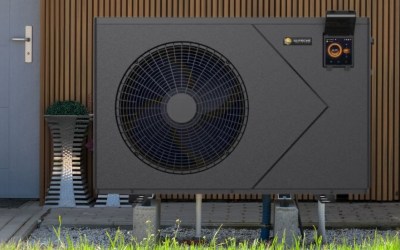
Australian pool owners frequently choose heat pumps since they are a reasonably affordable way to heat your swimming pool since they recycle energy from the air. Heat pumps may be superior to solar pool heating depending on where you reside in Australia. This is because it can still absorb heat from the air on overcast days and at night when the sun is not shining. Additionally, heat pumps typically warm your pool more quickly than some other pool heating options.
But with all the different types and sizes of heat pumps, how do you choose the best fit for your pool? Well, in this article we are going to talk about how to size a pool heat pump for your pool and certain things to consider while doing so! So let’s check it out.
Why Is Pool Heat Pump Sizing Important?
Electric heat pumps usually work by pulling warm air from the outside environment and injecting it into the pool water. It runs on electricity and heats your pool more slowly than a gas heater because it measures output in BTUs (British Thermal Units).
As a unit of heat measurement, BTUs are used to determine a pool heater’s capabilities. BTU values for pool heaters typically range from 50,000 to 150,000. You might be able to use a unit of 50,000 for smaller pools or pools that are above ground. Naturally, there will be larger requirements for larger pools.
A quick tip: always get a pool heater that has a few extra BTUs than you need when making your purchase. This will help you in a few ways.
- When compared to a smaller unit, it will heat your pool more quickly.
- A larger pool heater will operate more effectively and with less effort.
- Due to decreased operational time, saves you money over the long term.
Having said that, there are several other aspects to take into account when sizing your heat pump.
What to Consider When Sizing a Pool Heat Pump
Do you have a pool cover on?
A Pool Cover must be used at all times. The majority of the heat is lost by evaporation in the top layer of the pool’s water. Because the Pool covers maintain the temperature well, you can use a smaller pump more sparingly & save on your electricity bill too.
Additionally, they stop water from leaking, which lowers the cost of pool upkeep. You can choose from a wide range of solar cover solutions because they come in a variety of sizes and shapes. If you are located in or around Brisbane, Gold Coast, or the Sunshine Coast and still don’t have a pool cover then you could require a pool heat pump in a different size.
Location
You won’t need to boost the temperature by as much if your pool is indoors because it will already be warmer than an outdoor pool. The same rule applies to pools that are shielded & covered by shadows. The temperature of your pool may decrease if it is located in an exposed or windy place, where it is more susceptible to temperature and water level changes. Additionally, if your heat pump and pool aren’t big enough, it will take longer for the water to get warm.
Pool Size
The water composition of your pool is determined by water turnover, or how long it takes to move all of the water in your pool. This suggests that your pool’s volume is a crucial metric that needs to be precise. Your pool heater sizing needs to be matched by the size of your pump. We advise calculating the surface area as well as the length, breadth, and depth measures prior to meeting with a professional.
Environment Average Temperature
Find out what the average temperature is in your location. Consider additional elements including night-time temperatures, wind chill, and humidity. Purchase a larger pool heat pump if you live in a dry area with high wind gusts and cool overnight temperatures.
Preferred temperature
The majority of people enjoy swimming in slightly cool water, especially in the summer, so you may not require much heating during that time. You will need to raise the temperature of your water if you live in a cold climate or wish to swim in the winter. Swimmable water should be between 24 and 28 degrees Celsius. On the other hand, warmer temperatures can help individuals feel more at ease, keep their muscles warm, and avoid cramping.
So how to size a pool heat pump?
Regardless of whether you are buying a heat pump for the first time or simply replacing an existing one, here is your four-step approach to sizing a pool heat pump wherever you are located; Toowoomba, Northern Rivers, or Ipswich!
Step 1 is to calculate your pool’s size.
Take out your measuring tape and measure the length and breadth of your pool if you don’t already have this information. To calculate the area of your pool’s surface, multiply both the length and breadth. The volume is then determined by multiplying the area by the depth of your pool.
The volume would be 4 m x 6 m x 1.5 m = 36 cubic metres if your pool is 4 m x 6 m and has an average depth of 1.5 m. Your pool has a capacity of 36,000 litres because there are 1000 litres in a cubic metre (36 cubic metres x 1000 litres).
Step 2: Determine how many kilowatts your heat pump will need to run.
Finding the power required for your heat pump to warm your pool is necessary now that you know the volume of your pool. Divide your pool’s volume by a conversion factor of 2500 to arrive at this calculation.
This would be 36,000 L / 2,500 = 14 kW in the previous example. If you can’t find a heat pump that exactly fits this measurement, just pick one that comes the closest—but round up rather than down. Better more than less!
Step 3: If necessary, use an online calculator.
Dimensions and volumes aren’t always enough to choose the right pump for your pool. As we mentioned earlier, other factors contribute to sizing, such as pool location, preferred temperature and usage.
To include these factors, you’ll need to use an online heat pump calculator. This will factor in local information and preferences and provide more accurate recommendations. If you find this calculator isn’t detailed enough or you want a second opinion, contact us for some professional pool advice and/or for a full thermal audit of your pool.
Step 4: Reduce your options.
You now have a few heat pump options to pick from, whether you use our simple method, an online calculator, or help from a pool expert. Start by evaluating the features of each pump in relation to your requirements and financial constraints, frost protection, noise levels, Wi-Fi compatibility, and price.
Once you’ve done the comparison and eliminated the others, you’ll automatically find the most suitable one for you! The best thing you can do is call a professional, even though numerous guides and online calculators will be able to give you an idea of which sized heat pump to acquire for your swimming pool. Since buying a heat pump is an expensive investment, you should make sure it will maximize your returns and efficiency.
That Pool Heating Company Helps Size Pool Heat Pumps for Your Pool
For the majority of pool owners, calculating pool heat pumps is really challenging. We, at That Pool Heating Company can assist you with sizing pool heat pumps and we recommend the best options one for you & your lovely pool. To learn more about pool heat pump sizing and inverter pool heat pumps, feel free to contact us today!