There are three primary options for pool heating systems: gas heater pumps, solar pumps, and electric heat pumps. While each technique has its own set of advantages, solar energy is becoming more and more popular, and electric heat pumps are now improving in effectiveness. You should select a substitute that will work best for your pool type, your budget, and your lifestyle no matter what your goals are for pool heating. The objective of this article is to provide you with the knowledge you need to evaluate each pool heating option and choose the best option for your particular needs. To aid you in understanding both systems (SOLAR POOL HEATING OR ELECTRIC HEAT PUMP), we’ll compare the two and discuss the costs, heating speeds, environmental friendliness, and lifespan. So come on, let’s dive in!
ELECTRIC HEAT PUMPS
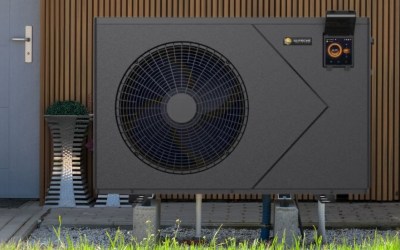
In addition to being substantially more expensive than solar, electric pool heat pumps also consume a lot more energy on a daily basis. They effectively act like an air conditioner, sucking heat from the atmosphere outside and pumping it through your pool.
An electric heat pump uses the same refrigeration cycle used by an air conditioner or refrigerator but in the opposite direction. Instead of releasing heat into the surroundings, it does so into the water. As long as the temperature is higher than 7.7 degrees Celsius, it merely takes heat from the ambient air.
An electrical heat pump may only take a little bit longer to heat your pool than a gas heat pump system, depending on the outside temperature. The Master Pool Builders Association of Australia states that electrical pumps can produce an output ranging from 6kW to 300kW, and the following factors should guide your decision:
- Your local area climate conditions
- The desired pool temperature
- The position of your pool
- Depending on swimming seasons
- Shading and exposure to wind
- The volume of the pool water
SOLAR POOL HEATING
The cost of solar heating is primarily its advantage. Installing, maintaining, and using it are all less expensive. Water is forced through a multi-tube solar collector, which is normally installed to the roof of your home, from the pool or spa and then returned to the pool to heat it. As the water moves through the solar collector, the sun warms it.
Solar pool heating systems in Gold Coast are efficient for nearly the entire Australian environment; however, they do not produce heat when it is raining or gloomy. Solar pool systems can be operated manually or automatically, and some still function on cloudy days, although perhaps not as effectively. Even though a solar system can only be used during the day, you can expect your swimming season to last up to an additional 2-3 months this way.
How warm your pool gets appears to depend on the size of the solar collectors you’ve installed as well as the pitch and orientation of the roof they’re mounted on. Also, consider the reasons for your decision to heat your pool. Solar might not be the greatest option for you if you want to swim in the winter.
The absence of sunlight in winter will result in a negligible variation in temperature during the colder months, despite the fact that this heating system will keep your pool warm during the summer and hold heat into the transitional seasons. That Pool Heating Company provides solar heating for pools in Toowoomba and many other hot spots across Queensland.
COST
You may also be wondering as to which system maybe more cost effective, well let’s see:
Heat Pump
You may have already guessed that the cost to operate a heat pump is more than the typical electric bill based merely on the description of how the system functions. And that’s about right!
Without a pool cover, the annual cost of operation can be anywhere from $700 and $2,500 due to the additional energy needed to keep the extra pump operating. They are also somewhat expensive to install at first. Typically, prices for the device and installation fall between $3,000 and $5,000.
Solar
With a solar pool heater, the only significant upfront expense is the installation cost. These costs resemble those of heat pumps, which typically range from $3,000 to $5,000. However, because there are so few expenses associated with running the system, this sum is quickly repaid.
You won’t notice much of a spike in your energy bills because it uses the current pool pump and solar energy is free. Your energy costs will increase by a few dollars a month if your circulation pump needs to occasionally run longer than usual. In comparison to the annual cost of a heat pump, this is far more affordable.
HEATING SPEED
Heat pump
A heat pump’s ability to quickly heat a pool is dependent on a few different variables. The larger the heat pump the faster the heating. It takes between 24-72 hours in the winter to initially heat up the pool and then would need to run between 8-12 hours a day to maintain the temperature, this of course is much less in the shoulder months
But it’s an important point to consider, since it helps consumers decide what size pool heater to buy and how long they should let the heat pump run for to warm the pool to the appropriate temperature.
Solar
Solar pool heating depends on the sun’s warmth to warm the collectors, so if it’s not the warmest day, you can have trouble getting the temperature you prefer. On those days, of course, you may end up not actually wanting to swim! It also depends on the size; that is how big the system is.
Different businesses have different recommendations for the solar collector area; some advice using as little as 80% of your pool’s surface area. That Pool Heating Company advises you to at least match every square metre of your swimming pool’s surface size with the equivalent amount of roof space. Your pool will heat up as rapidly as possible if you do that. Often customer with larger roof space will opt for 150-100% coverage for a really fast heat up time and longer season.
ENVIRONMENTAL FRIENDLINESS
While solar heaters rely on solar energy, heat pump systems depend on electricity. The solar pool heating system is more environmentally friendly than the electric heating pump, even though both are significantly more environmentally friendly than the alternative gas heating pump, which burns fuel to heat your pool.
Solar heating systems don’t produce any air pollution at all, unlike gas pool heaters. Going green with solar heating is a popular option for home and business owners trying to reduce their carbon footprint.
LIFESPAN
Although they cost a lot to install, solar panel pool heaters are practically cost-free to run and have a longer lifespan. Some solar pool heating systems, especially the Boss Solar Rhino panels can live for up to 25 years. They normally require minimal maintenance and little to no repair for most of their lifespan.
Electric pool heaters, on the other hand, have a general lifespan and can function for up to 7 to 10 years before failing. Moderate maintenance is also required, but basic servicing inspections are simpler for the typical pool owner to perform.
OPTIMIZING ON YOUR POOL HEATING
There are a number of techniques to increase a heating system’s efficiency and cut operating expenses, regardless of the one you select.
Pool covers
Pool covers in Brisbane and Sunshine Coast stop pool heat from escaping through the water. These straightforward, low-tech tools can significantly contribute to your heating system’s ability to stay competitive.
Solar pool rings
Many people disapprove of the use of pool rings as an additional source of pool heating. They do, in fact, function. Additionally, if you use enough of them, they will lessen the amount of water that evaporates.
Floating solar panel heaters
These resemble little solar pool heating modules that are mounted on roofs. Although pricey, they are one of the better methods to support efforts to heat pools traditionally.
SO, IS IT SOLAR POOL HEATING OR ELECTRIC HEAT PUMPS?
The decision between solar heaters and heat pumps will ultimately depend on the characteristics of the pools and the user’s preferences. Solar heaters are more economical to operate and less expensive to purchase than heat pump heaters. Solar pool heating can heat more quickly, but electric pool heaters deliver results no matter what the weather is.
Both, heat pumps and solar pool heaters offer various advantages and disadvantages, and ultimately, your pool, your money, and your personal demands would probably determine which is best for you!
If you are around the areas of Brisbane, Toowoomba, Gold Coast, Sunshine Coast, Northern rivers, and Ipswich, get in touch with That Pool Heating Company TODAY to extend your swimming season!