The mild winters are one of the biggest perks of our state of Queensland. Here on the glorious sun-kissed beaches of the Sunshine Coast, or in the old-timey streets of Toowoomba, or anywhere along the Gold Coast— there is always sunshine and warmth. The fact that the winters are mild, however, doesn’t mean it’s summer year-round. You might have learned that the hard way if you used your springboard to dive into the water, in the middle of winter, only to have your senses shocked by the cold!
Pool heating is your go-to solution if you don’t want to have to give up jumping off your springboard into the pool, even during the winter months. It’s your go-to solution if you want to skip that painstaking and time-consuming process of dipping your toe in the pool water several times just to brace yourself before diving headfirst into freezing water. It’s your go-to solution if you want to use the pool in winter, and not end up with an awful cold. Simply put, pool heating is your go-to solution if you want to swim comfortably in the winter months, without goosebumps breaking out over your skin, or your teeth chattering.
Now that we’ve established WHY you need to invest in a pool heating unit, let’s explore what you need to know and consider before investing in one!
Cost
Naturally, the cost is the first thing you’ll want to consider before investing in a pool heating unit. After all, as tempting as it is to be able to swim year-round, no one wants to have to pay a kidney for it! Which is great, because you don’t actually have to.
While costs vary depending on what type of pool heater you are going to invest in, it has to be noted that the benefits far outweigh the cost. Electric pool heaters often require a greater initial investment, while gas pool heaters are less expensive initially but have a higher operational cost due to the amount of gas needed. Solar pool heaters, too, require a greater initial investment but incur lesser operational costs.
On average, pool heating might cost you between AU $3000-$4000, for a standard 32 m² swimming pool.
Type of swimming pool
You need to first consider what type of swimming pool you have, and then prioritize your requirements for heating, accordingly.
If yours is an above-ground pool, that means it has the same depth throughout, which, in turn, means that there is less water to heat since there is no deeper end. In-ground pools, on the other hand, have no depth uniformity, and they do have a deeper end, which means there is a higher volume of water that requires heating. However, above-ground pools do also tend to lose heat from the sides which are exposed.
Swimming pools also absorb heat during the daytime and lose heat during the night, when temperatures drop. Therefore, if yours is an indoor pool, this means that it’s going to be losing much less heat as compared to an outdoor pool.
(You can use pool covers to conserve the heat absorbed by your swimming pool!)
Heat Pump Pool Heater Size
When choosing a swimming pool heater, it is very important to consider the size of your swimming pool and choose a heater accordingly. This is because, the larger the pool, the more powerful your swimming pool heater will need to be. A heater that’s too large will use more energy for no reason, while a heater that’s too small will have to work overtime to heat the whole pool.
In order to size a pool heater, you need to consider the surface area of your swimming pool, and the difference between the pool and the average air temperatures.
You will also need to factor in external criteria that affect the heating temperature for outdoor pools, including wind speeds, humidity levels, and cool night temperatures.
Sizing analysis
Some things you should take into consideration while performing this sizing analysis, are as follows:
-Desired swimming pool temperature.
-Average temperature for the coldest month of pool use.
-You can obtain the temperature rise needed by calculating the difference between the average temperature for the coldest month and the desired pool temperature.
Pool volume formula
You also need to measure the surface area of a swimming pool, as well as its volume. Here’s a formula you can apply to find the volume of your swimming pool:
1. Add the deepest part of the pool to the shallowest part, and divide it by two, to find the average depth.
2. You can get the approximate pool volume in cubic feet, by multiplying the average depth by the surface area.
3. You can convert the units of cubic feet into gallons, by multiplying it by 7.48.
If all that sounds like rocket science—we promise you, it really isn’t!
But if you’d rather not go through all that math, that’s all right too, because in order to determine pool heater size, it’s always recommended that you have a trained pool professional perform a proper sizing analysis for your pool.
Installation and Maintenance
Always make sure to have a pool professional install and set up your swimming pool heater—especially the electric hookup–, no matter how tech-savvy you consider yourself to be! Also, make sure you consult a pool professional when carrying out complicated maintenance actions or repairs.
As with any device, swimming pool heaters do require proper maintenance, following installation. While they don’t require extensive looking after, you do have to conduct routine check-ups to make sure everything is in working order. Your owner’s manual will outline the how-to-do’s of these maintenance routines.
Where to set up the pool heater
It’s important to make sure you have enough space to set up your pool heater, and it’s even more important to make sure it’s the right kind of space!
Heat pumps usually require very large amounts of air in order to function properly. Moreover, if you’re considering using a gas swimming pool heater, it needs to be positioned outdoors, in order to ensure maximum ventilation.
Solar pool heaters work best when under direct sunlight because this condition ensures that energy loss is minimal. If your swimming pool isn’t exposed to direct sunlight, you’ll have to install a few additional solar pool collectors to heat the pool.
Type of pool heater
With all these considerations in mind, here’s the big question. What type of swimming pool heater should you opt for? Which swimming pool heater will work most efficiently under your own unique conditions, and within your own unique requirements?
There are different types of pool heaters, each with its own unique set of pros and cons. You have the option of investing in a gas pool heater, an electric heat pump, a solar pool heater, or even a pool cover and roller to keep the heat trapped in during the colder months!
You can choose what type of pool heater works best for you, based on your individual priorities and criteria.
If you don’t want to spend ages installing your pool heater, and then waiting for your pool to heat up, then our pool covers and rollers are just the things for you! Although they provide only a small measure of heat retention and heat gain, pool covers and rollers are the most convenient and least time-consuming options.
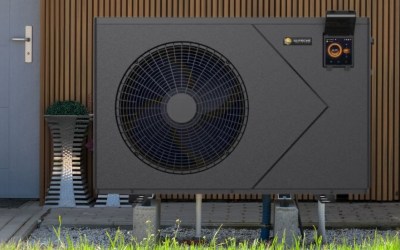
The latest in inverter heat pump technology, Heat-seeker Novas, is your ideal pool heater if you want to opt for a more energy-efficient, effective pool heating option.
If you’re environmentally conscious and you want to do your part in reducing your carbon footprint, look no further than our solar pool heating units!
If you’re still feeling conflicted, however, you can always contact us and we’ll be glad to provide you with your own personalised solution to your cold swimming pool!
Happy Heating!